
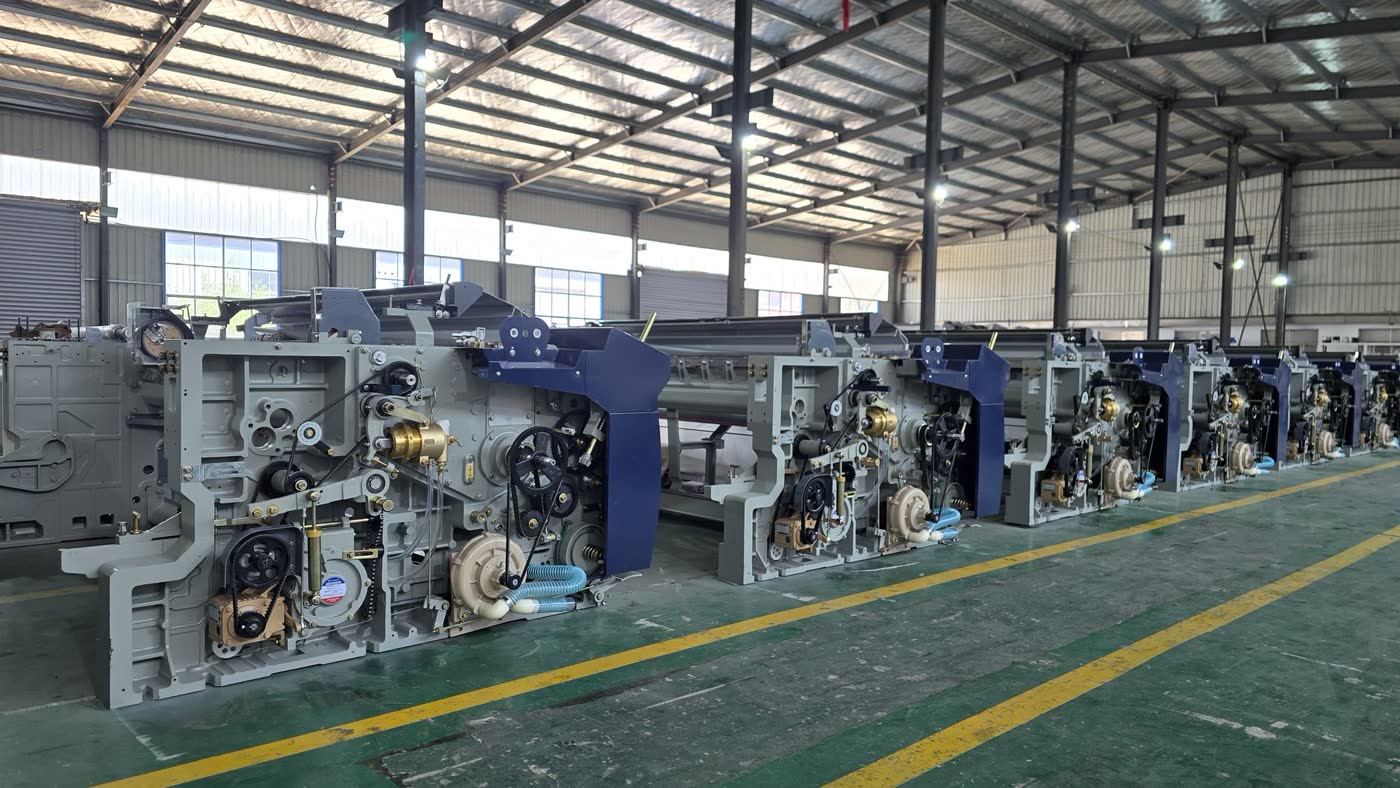
Once the weaving cycle is clear, the next task is to turn your fabric and production requirements into a practical waterjet loom specification. Review fabric data, factory conditions, included systems, and target output in the same order so suppliers' quotations can be compared on an equal technical basis.
STEP 01
Confirm the fabric and yarn before the model
Before comparing models, confirm the fabric construction, end use, warp and weft material, count or denier, twist, density, and preparation quality. Waterjet looms are mainly for polyester, nylon, and other hydrophobic continuous filaments; pure cotton and linen should not be specified.
- Fabric construction, end use, and reference sample
- Warp and weft material, count or denier, twist, and density
- Quality targets such as appearance, width, and edge requirement
STEP 02
Match finished width, reed space, and selvage
Finished fabric width and nominal reed space are not the same. The loom needs allowance for weaving and edge formation. Confirm the required fabric width and selvage method first, then select a practical reed space and installation footprint.
STEP 03
Set the pump, nozzle, and insertion timing as one system
Think of the pump, nozzle, and timing as one insertion system. Selection depends on the weft plan, yarn condition, insertion distance, and fabric structure. Cam motion, plunger, check valves, nozzle direction, water volume, pressure, and timing must be coordinated, especially when the fabric style changes.
STEP 04
Choose shedding by weave repeat and heald-frame demand
The weave plan should determine the shedding system. Crank shedding suits simple repetitive weaves, while cam shedding provides controlled motion for fixed patterns. Electronic dobby is appropriate when the fabric needs more heald frames or longer, more flexible repeats. More complexity is useful only when the fabric requires it.
STEP 05
Review tension control, drive, water, and factory utilities
Let-off controls warp delivery and tension; take-up controls winding and pick density. Before ordering, also confirm the drive, control, filtration, drainage, voltage, foundation, layout, spare parts, and technical-support scope. These items affect installation and daily operation as much as the model name.
Send the fabric details before requesting a final quotation
JETMECH will review the application with you, explain which specifications affect the fabric, identify the optional items, and clarify what should be confirmed before ordering.